
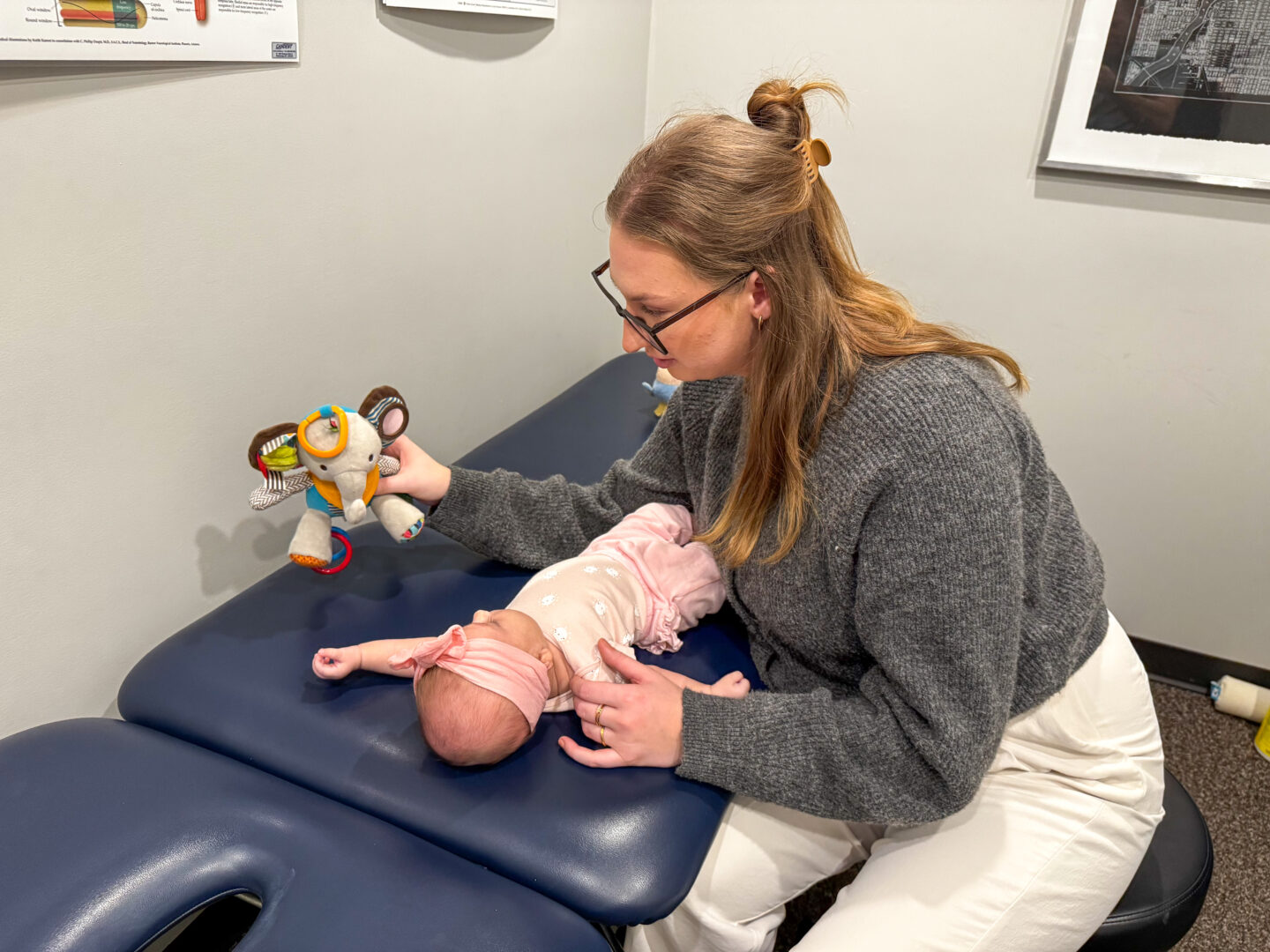
Understanding Torticollis and Plagiocephaly: What They Are and How Physical Therapy Can Help
Parents often hear unfamiliar medical terms during their child’s early years. Two of the more common conditions affecting infants are torticollis and plagiocephaly. While these terms might sound intimidating, they’re both manageable with proper care and attention. This post will break down what these conditions are, why they happen, and how physical therapy can make a difference.
What Are Torticollis and Plagiocephaly?
Torticollis, or “twisted neck,” occurs when a baby’s neck muscles become tight, causing their head to tilt to one side and rotate to the other. This can result in difficulty turning the head or keeping it in a neutral position. The most common type in infants is congenital muscular torticollis (CMT), often caused by tightness in a specific neck muscle called the sternocleidomastoid.
Plagiocephaly, often referred to as “flat head syndrome,” is a condition where a baby’s head develops an uneven or asymmetrical shape. It’s frequently associated with torticollis because limited neck mobility can cause a baby to favour lying on one side of their head, leading to flattening.
Epidemiology
- Torticollis is relatively common, occurring in about 3 in 100 newborns. It can develop as a result of fetal positioning in the womb or birth trauma.
- Plagiocephaly affects approximately 20-30% of infants, particularly since the “Back to Sleep” campaign emphasized placing babies on their backs to reduce the risk of sudden infant death syndrome (SIDS). While this practice is critical for safety, it has also increased the prevalence of positional plagiocephaly.
Risk Factors
Several factors can increase the likelihood of torticollis and plagiocephaly:
Torticollis:
- Intrauterine position: Limited space in the womb, particularly in cases of twins or larger babies.
- Traumatic birth: Difficult or prolonged labor can strain a baby’s neck muscles.
- Congenital conditions: Rarely, bone abnormalities in the neck or spine may contribute.
Plagiocephaly:
- Consistent sleeping position: Babies who spend extended time lying on one side.
- Reduced tummy time: Insufficient time spent on their stomachs during waking hours.
- Torticollis: Restricted neck movement makes it harder for a baby to shift head positions naturally.
- Prematurity: Premature infants have softer skulls, making them more prone to flattening.
How Physical Therapy Can Help
The good news is that physical therapy is highly effective in treating both torticollis and plagiocephaly. However, it’s essential to work with a physical therapist who has specialized training in these conditions to ensure the best outcomes. Early intervention often leads to excellent results, so if you notice symptoms, seek help as soon as possible.
For Torticollis:
- Stretching exercises: Physical therapists guide families in safe, gentle stretches to loosen tight neck muscles.
- Strengthening exercises: Activities to strengthen the baby’s weaker muscles, promoting balanced movement.
- Positioning strategies: Techniques to encourage the baby to turn their head toward the less-preferred side.
- Tummy time: Increasing time spent on their stomach can help strengthen neck and shoulder muscles.
For Plagiocephaly:
- Repositioning techniques: Physical therapists teach parents how to position their baby to reduce pressure on the flattened area of the head.
- Tummy time: Encourages pressure relief on the back of the head while promoting development.
- Helmet therapy: In more severe cases, a custom-fitted helmet may be recommended to gently reshape
- the skull. Physical therapists can work in conjunction with specialists to ensure optimal progress.
When to Seek Help
If you notice any of the following signs, consult your pediatrician or a physical therapist:
- Your baby’s head consistently tilts to one side or they have trouble turning their head.
- A noticeable flat spot on your baby’s head that isn’t improving.
- Difficulty feeding on one side due to head tilt or stiffness.
- Delays in meeting motor milestones, such as rolling or sitting.
Our clinic is proud to have a physical therapist with specialized training and additional expertise in treating torticollis and plagiocephaly. We offer personalized, evidence-based care to support your baby’s development and give you confidence every step of the way. Click here to get to know a bit more about Annika!
Conclusion
While torticollis and plagiocephaly can feel overwhelming for new parents, these conditions are highly treatable with early intervention. Physical therapy provides safe, effective solutions to improve neck mobility, strengthen muscles, and promote healthy head shapes. If you’re concerned about your baby’s development, don’t hesitate to book an assessment with Annika here. With the right support, your little one will be back to moving and growing with ease in no time!