
When we talk about osteoporosis prevention, the spotlight usually falls on calcium, vitamin D, and strength training—and for good reason. Strong bones and strong muscles are essential for maintaining mobility and reducing fracture risk as we age. But there’s one crucial element that often gets overlooked: balance training.
In fact, improving balance may be just as important as building bone density, because most osteoporotic fractures don’t happen simply because bones are weak—they happen because people fall.
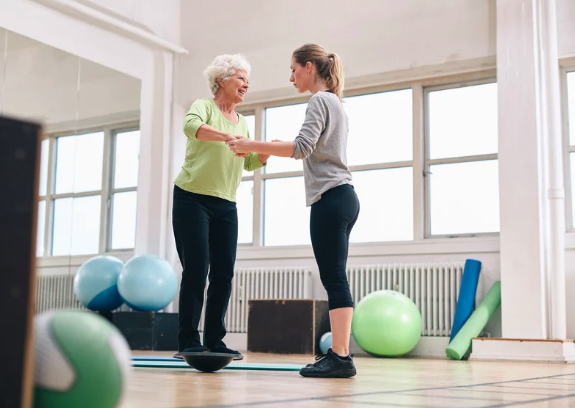
That’s where a kinesiologist—especially one who is Bone Fit–certified—can make a big difference. They specialize in safe, evidence-based movement strategies for people with low bone density, helping you build strength, improve balance, and confidently stay active.
1. Osteoporosis Doesn’t Just Increase Fracture Risk—Falls Do
Osteoporosis makes bones more fragile, but a fracture still requires some sort of force. That force often comes from an unexpected trip, slip, or loss of balance.
- Over one-third of adults over 65 experience at least one fall each year.
- Falls account for the majority of hip, wrist, and spine fractures in people with low bone density.
While building bone strength is important, balance training is what helps prevent the event that leads to a fracture.
2. Balance Training Keeps Your Reflexes Sharp
As we age, our reaction time slows. Muscles respond a little less quickly, and our ability to right ourselves after a stumble becomes less automatic.
Balance exercises help retrain and reinforce:
- Proprioception (your awareness of where your body is in space)
- Coordination
- Speed of reaction
A kinesiologist can progress these exercises safely and appropriately—especially important for individuals with osteopenia or osteoporosis.
3. It Strengthens the Stabilizing Muscles That Support Your Spine and Hips
While traditional strength training focuses on major muscle groups, balance work engages:
- Deep core muscles
- Hip stabilizers
- Ankles and foot musculature
These smaller muscles keep you steady during everyday tasks like walking on uneven ground, stepping out of a car, or carrying groceries. Strong stabilizers act like shock absorbers, providing a protective buffer for your bones and joints.
4. It Improves Posture—Another Key Factor in Spine Health
Poor posture or forward rounding of the spine increases compressive forces on the vertebrae. Developing better balance naturally encourages:
- Upright alignment
- Improved core support
- Reduced strain on the spine
This is especially important for individuals with osteopenia or osteoporosis, where spinal compression can be a concern.
5. Balance Training Is Easy to Incorporate Into Daily Life
You don’t need equipment or a gym membership. Just a few minutes a day makes a noticeable difference.
Try simple exercises like:
- Single-leg standing
- Heel-to-toe walking
- Weight shifts
- Standing on an uneven surface (like a folded towel)
- Tai Chi or gentle yoga
Consistency matters more than intensity.
6. It Boosts Confidence and Reduces Fear of Falling
Many people living with osteoporosis or a history of falls become nervous about movement. This fear often leads to doing less—which ironically increases fall risk.
Working with a kinesiologist helps you rebuild:
- Stability
- Trust in your body
- Confidence in daily movement
The more assured you feel, the more active and independent you remain.
The Bottom Line: Build Bones, But Also Prevent Falls
Osteoporosis prevention isn’t just about strengthening bones—it’s about protecting yourself from the everyday moments that can lead to injury. Balance training fills that gap.
Partnering with a Bone Fit–certified kinesiologist gives you:
- Expert guidance
- Tailored balance and strength programs
- Safe movement education
- Support to stay active long term
If you’d like to learn your fall risk or start a customized balance training plan, our kinesiologist is here to help.